
Accountability Across Borders: When Growth Outpaces Control
For entrepreneur Darrell Morton, owner of Botswana-based aquatic sport company, DMSS, and partner in Cape Town design firm LMI, growth didn’t feel like success. It felt like exhaustion.
DMSS had grown rapidly, expanding from a single swim school into a sports complex with retail and restaurant operations, as well as multiple branches at local schools. But as the company scaled, Darrell found himself flying 2 hours, or driving 20 hours, to stay connected to the team.
“To manage the operation by remote control was getting more and more difficult,” he recalls.
Then COVID hit, forcing the entire team to operate remotely. The structure he had relied on fragmented almost overnight, threatening the health of the entire organization.
The Breaking Point
While Darrell could sense his people cared, there was no visibility into what everyone was responsible for or what progress looked like. Team meetings dragged on as individual goals had to be revisited each time they met.
“I was struggling to get my team to be accountable. Accountability was a big issue.”
He was pulled further into the day-to-day instead of driving strategy and growing sales.
“I found myself chairing and speaking a lot in the meetings. I was exhausted at the end of them, with very little input from others.”
Darrell knew he needed to empower his team to run meetings and drive their strategy, but creating that accountability from 2,000 kilometers away felt impossible.

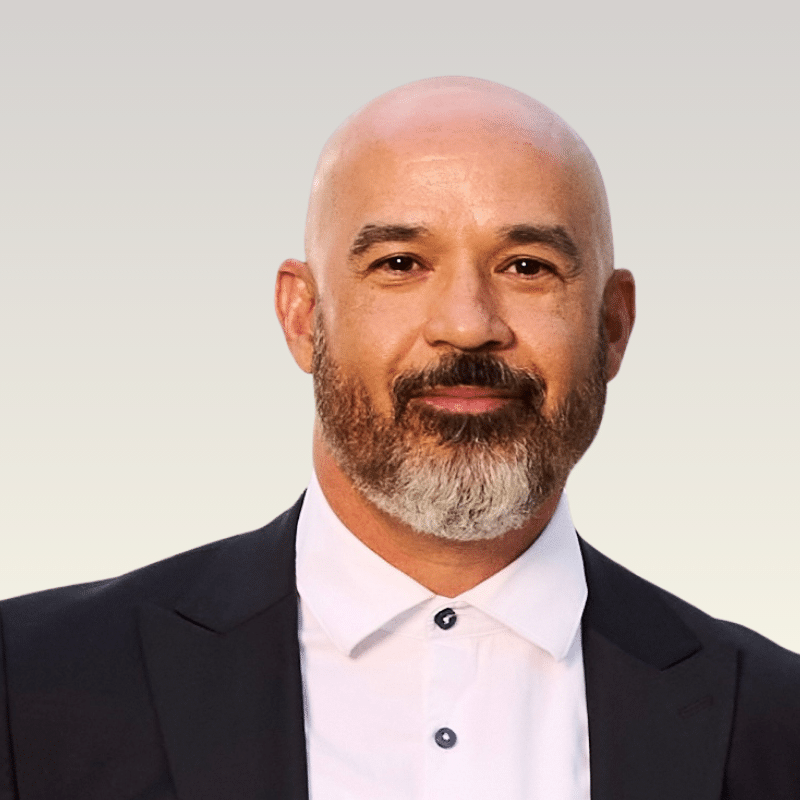
Just having everything in one place created a culture of ownership. Each person having ownership of a number or metric made accountability real.
Darrell Morton, Owner, DMSS

The Solution: Visibility Creates Accountability
Darrell knew he needed a solution that would help the team function as a cohesive unit, so he consulted the web for ways to manage strategy from afar.
That's when he discovered Align.
"I had a 30-page strategic plan that nobody ever read," he admits. "I knew right away that Align's one-page idea just made sense. Seeing everything at a snapshot, knowing your score, like a sports team."
Align’s single-page plan replaced the unread 30-page strategic plan, while individual ownership of metrics and numbers delivered the accountability Darrell sought.
Darrell brought ten DMSS managers onto the platform and saw immediate improvements.
A Parallel Story
Meanwhile, in Cape Town, his wife's interior design business, LMI, was growing toward its own version of the same struggle.
Her creative team relied on her for nearly every decision. The business was growing fast, and she was carrying the entire load, making a slow march toward stagnation and founder burnout.
Not for lack of talent or effort, the health of the business and its founder was at risk.
After experiencing the power of Align’s simple tools, Darrell used the accountability chart to map responsibilities in LMI’s business process. It was immediately clear that her name appeared on nearly every function.
"I used that to show her how, in the beginning, I was in the same position. My name was everywhere. And basically, how can you scale like that?"
The investment in Align, questioned as "too big for a small business", was about to prove invaluable.
The Results: Freedom to Lead from Anywhere
Once DMSS moved its priorities, KPIs, and ownership into Align, meetings that used to drag on for hours became sharp, focused, and contribution-driven. Team members no longer waited for Darrell to steer the conversation; they came prepared, they knew their numbers, and they took responsibility for their progress.
"Just having everything in one place created a culture of ownership," Darrell says. "Each person having ownership of a number or metric made accountability real."
With visibility no longer dependent on proximity, Darrell’s role changed almost overnight. Instead of firefighting from afar, he finally had the headspace to lead.. He wasn’t repeating instructions or pulling updates out of people; he was guiding the business toward growth.
"I've had more time to focus on bringing business in and using my time in better places—more strategic and proactive rather than managing everybody."
And the numbers reflected that shift. Even while running DMSS from a different country, Darrell watched the company maintain steady 10% annual growth. Profitability remained stable despite a harsh economic downturn in Botswana’s diamond-dependent market, proof that alignment and accountability held the company steady even when external conditions didn’t.
Align didn’t just help the team stay on track; it gave Darrell the freedom to lead from anywhere and the confidence that the business could thrive without him hovering over every detail.
LMI: Scaling Through Clarity
For LMI, the shift was just as powerful. Once roles and priorities were made visible, the team began stepping up.
"Now, people are taking more accountability for their targets," Darrell says. "It's clear if somebody's had a good week or not."
The results spoke for themselves: In just one year, LMI's revenue climbed 40–50%—powered by better focus, clearer accountability, and a culture that encouraged ownership at every level.
"We thought we were too small to use a system like this," Darrell reflects. "But it's given us clarity, direction, and the ability to scale—without burning out."
The Takeaway: Freedom Through Focus
Across both companies, Align became the common rhythm that connected daily activities to the long-term vision. It transformed scattered communication into structured dialogue, giving Darrell the freedom to lead from anywhere.
His teams became accountable to their numbers, their functions, and to one another. What once felt like juggling two businesses across borders became manageable, even energizing.
"You spend so much time working in the business, it becomes a job. This gave me the chance to work on the business."
From swim schools in Botswana to design projects in Cape Town, Align enhanced what Darrell’s teams were already capable of. It gave them clarity and confidence, and gave Darrell back the time he needed to truly lead his organization.
And ultimately, it turned two companies on the brink of overload into organizations that could scale anywhere at any pace they choose.