
The Execution Mistakes That Stall Your Growth—and the Business Habits That Fix Them
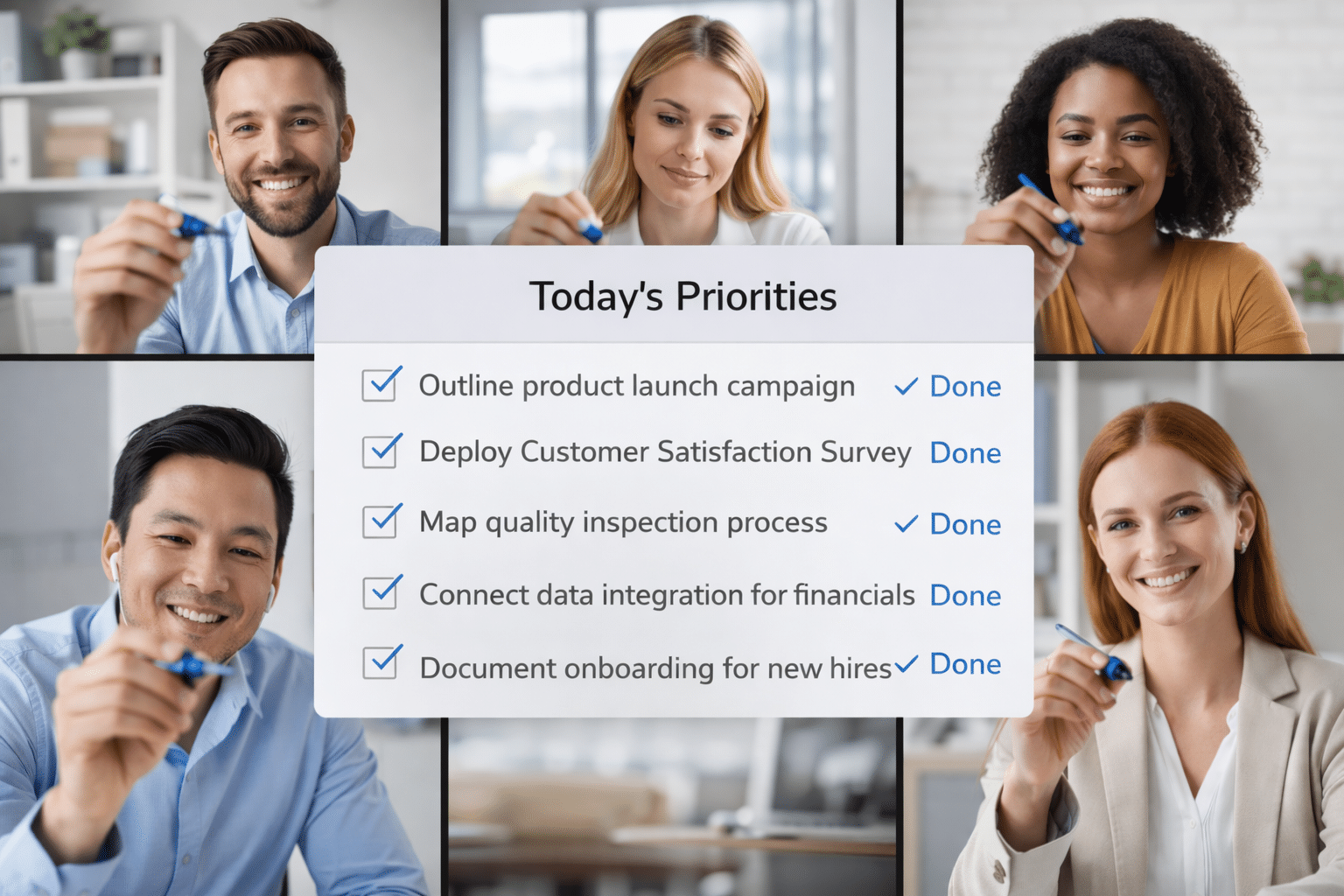
If you aren’t growing, you’re dying. This couldn’t be truer in today’s business climate. In some industries, ease of entry and technology allow competitors to flood the market. Companies that aren’t planning to grow, to innovate, risk stagnation at best. At worst, they lose market share, shrink, or fail.
However, even a company with a strong growth strategy is at risk.
Scaling a company requires more. More people, more systems, more execution. Some organizations are well-positioned for the added weight, but most experience cracks in their execution model right after kick-off.
This isn’t a strategy issue. It’s not a motivation issue.
And it’s rarely a talent issue.
It’s a breakdown in good business habits. The daily behaviors that once held execution together aren’t enough to scale.
This article highlights the most common execution mistakes that cause scaling to break down, why they happen, and the business habits that correct them.
Mistake #1: Assuming Strategic Focus Lasts After The Kickoff
The priorities were clearly displayed. Targets were agreed on. The motivation was palpable. Your department leaders left with what appeared to be a genuine commitment to execute.
Then the workweek resumed.
By the time the first monthly update meeting rolled around, progress had already slowed.
This is where many leaders pause and ask the wrong question: Why didn’t they follow through?
The better question is: What reinforced the priorities after everyone left the room?
Why leaders fall into this trap
Reason #1: You have a capable, engaged team that genuinely wants to do the right thing. Micromanagement feels unnecessary—and counterproductive.
Reason #2: The planning session felt decisive. You had some hard conversations, and tradeoffs were made. It feels reasonable to assume the outcome will carry forward.
Reason #3: Leaders assume that once something is said, documented, and agreed to, it will naturally stay top of mind as work resumes.
In smaller organizations, that assumption often holds. Context travels informally. Everyone is close enough to the work—and to each other—that focus stays intact.
But when you add people, more volume, and more initiatives, it doesn’t.
The habit that fixes it
Strategic focus doesn’t disappear all at once. It erodes quietly when nothing pulls attention back to the priorities once the week starts applying pressure. And by the time leaders notice it in a monthly review, execution hasn’t just slowed, it’s already been redirected elsewhere.
The highest performing organizations treat focus as a daily behavior, not a monthly or quarterly update. They design the workweek so priorities can’t fade into the background. Harvard Business School recommends “optimizing strategy execution by leveraging strategy communication, accountability, and organizational design.”
This means priorities are visible every day. Teams don’t rely on memory or meeting notes. They see what matters on a platform, keeping strategic priorities front and center every day. Leaders and team members re-engage with the most important targets every day, so that even when the week gets busy or attention is pulled in multiple directions, they always have to come back to that main priority.
Mistake #2: Keeping Targets and Progress Locked in Executive Spreadsheets
You review targets and progress in spreadsheets, dashboards, or decks that only leaders see. The spreadsheet lives on your desktop or in a shared folder. The dashboard gets pulled up in executive meetings where the numbers are discussed, debated, and dissected by a small group at the top. Meanwhile, the rest of the organization keeps moving through their day, focused on tasks, tickets, projects, and requests, largely unaware of how close (or far) the company actually is from the goal.
Leaders fall into this pattern because it feels efficient and controlled. Numbers can feel abstract at the team level, and there’s a quiet assumption that individual contributors don’t need to see them to do their jobs. But over time, this separation creates a gap.
Why leaders fall into this trap
Reason #1: You assume individual contributors care more about tasks than outcomes. Numbers feel abstract compared to daily work.
Reason #2: Spreadsheets feel efficient and controlled. They’re familiar, flexible, and easy to update.
Reason #3: Leaders worry that broad visibility will create confusion, pressure, or unnecessary questions.
But this disconnects your people from the target.
The habit that fixes it
When progress isn’t visible to the people doing the work, execution becomes disconnected from outcomes. Teams stay busy, leaders stay informed, but results still arrive late or short, and nobody can point to why.
Use a platform or board to display a small set of meaningful targets. This clearly defines what winning looks like and keeps the team focused on what matters. It connects them to how their daily actions contribute to the larger priorities, boosting motivation and building confidence.
Mistake #3: Assuming Managers Know How to Execute at Scale
At some point in the growth curve, the people you rely on most become managers. They were the ones who could always be counted on to deliver. They knew the business, understood the work, and didn’t need much direction. Promoting them felt obvious, and deserved.
Then the organization grew, and suddenly, execution started to look uneven. One department consistently hit its targets while another struggled to keep up. Managers worked longer hours, jumped between meetings, and personally filled the gaps in the team just to keep things moving. Senior leaders stepped in more often to resolve confusion or unblock decisions that shouldn’t have reached that level.
In this scenario, day-to-day operations keep running, but strategic work slips. Leaders make this mistake because strong individual performance is often mistaken for execution leadership skills.
Why leaders fall into this trap
Reason #1: Your managers are smart, experienced, and reliable. They’ve earned trust through their own output.
Reason #2: They were promoted for getting things done.
Reason #3: Leaders assume execution skills develop naturally over time, rather than needing to be taught, modeled, and reinforced.
At scale, that assumption breaks down.
The habit that fixes it
At scale, execution is about creating the structure that allows others to execute consistently. Treat execution as a leadership skill that requires guidance and practice.
Provide clear frameworks for prioritization, accountability, and follow-through so managers aren’t inventing tactics on the fly or falling into old habits that don’t deliver. Give them a consistent operating structure for translating strategy into daily execution. Good habits are reinforced through the system, reducing the need for constant coaching or escalation.
Mistake #4: Using Weekly Check-ins for Alignment
You rely on weekly leadership or department meetings to maintain alignment. The problem is that the meetings lack structure and don’t encourage the correct priority-focused updates.
In practice, those meetings are often the first thing sacrificed when the week gets busy. Or they’re held under pressure, rushed, and unfocused. Without a clear structure tied to strategic priorities, updates turn into explanations. Managers report why something didn’t move, what issue came up, or what’s demanding attention now.
Why leaders fall into this trap
Reason #1: Department heads are doing what they’re supposed to do—attending meetings, sharing updates, reporting issues.
Reason #2: Weekly meetings create a sense of coordination.
Reason #3: Leaders assume that once information is shared at the top, it will naturally cascade.
The habit that fixes it
When priorities are only revisited in scheduled meetings, they compete with everything else the rest of the week. Daily check-ins change that dynamic.
Encourage daily communication beyond the meeting room. Use a framework to build a daily check-in at both the team and the leadership level that focuses on what matters most today.
These check-ins aren’t status updates or problem-solving sessions. They’re structured touchpoints that report progress, highlight obstacles, and keep attention anchored to the top priority before the day fills up. Over time, this habit reduces the need to renegotiate priorities in meetings or to explain why things didn’t move forward.
Mistake #5: Adding Tools Instead of Strengthening Habits
When execution starts to feel chaotic, the instinct is to look for something tangible to fix it.
Leaders make this mistake because tools promise clarity without requiring uncomfortable behavioral changes. It’s easier to adopt new software than to alter how priorities are set, how ownership is enforced, or how follow-through is reviewed. But without strong execution habits in place, new tools simply add another layer of complexity and frustration. Teams partially adopt or work around them.
Why leaders fall into this trap
Reason #1: New tools promise better reports, workflows, and overall improvement.
Reason #2: Buying software feels faster and less uncomfortable than changing habits.
Reason #3: Leaders hope a tool will fix execution gaps without requiring new discipline from the team.
Instead, complexity and frustration increase.
The habit that fixes it
Use tools to reinforce habits, not replace them.
Look for tools that unify strategy, execution, metrics, and meetings into one operating structure. Focus doesn’t disappear when the week gets busy because priorities are reinforced where decisions are made and progress is communicated. Because ownership and progress are visible to everyone, accountability doesn’t break down, especially when conditions aren’t ideal.
The Pattern Behind Scaling Breakdowns
These mistakes share a common thread: They assume execution will hold without good daily business habits.
At scale, good business habits don’t happen by default. They need structure. Without that structure, leaders compensate by adding more meetings and spending more time intervening personally. Execution still moves, but it becomes effort-driven instead of habit-driven. Over time, that effort becomes exhausting, and progress slows because the system isn’t doing enough of the work.
The Central Question for Leaders
If execution feels harder than it should at your current stage of growth, ask yourself:
Which of these mistakes shows up most often in your organization?
The answer usually points directly to where you need stronger business habits.
If you’re a CEO or Executive Leader and you want a clear read on where execution is breaking down (and which habits will have the biggest impact), book a short “Can you solve this?” session.
Walk us through what you’re experiencing, and we’ll give you a concrete recommendation on where to start.
The Ultimate Alignment
The Align platform exists for the exact moment execution starts to drift. It isn’t another layer of process. It becomes the structure through which execution happens every day.
It reinforces:
- Focus on the right priorities
- Clear accountability and ownership
- Visible targets and metrics
- Execution rhythms that hold under pressure
Not just weekly or quarterly.
Every day.
To go deeper into building strong execution habits on your team, enroll in the FREE Execution Blueprint email course today!
Make Small Changes Today for Big Wins Tomorrow.