How AEco Hit Their 5-Year Goal Two Years Early
Lee Watson joined AEco with a clear understanding that he would eventually become CEO, and when he did, he intended to build something worth handing down.
AEco is a brand umbrella for three manufacturing companies across two states: Alloy Engineering in Berea and Cuyahoga Falls, Ohio; Mach 3 Machining nearby; and ThermCraft in Winston-Salem, North Carolina. Each company had its own leadership team, its own culture, and its own way of measuring progress.
Together, they employ nearly 200 people who don’t just work at the company; they own it. AEco is Ohio’s first and oldest ESOP, and that distinction shaped everything about how Lee approached running the business.
Their BHAG (big, hairy, audacious goal) was, and still is, to enable every employee-owner to retire with an equal or higher standard of living. It’s a promise that requires the entire organization to perform, every year, across every entity. And when Lee looked at how the three companies were actually operating, he saw a problem that threatened that core mission.
Each Company Had Its Own Operating Rhythm
It wasn’t surprising that each company was doing its own thing and operating at varying standards. There was no common rhythm connecting what happened on Monday mornings at Alloy to what was happening at ThermCraft. No shared language for what progress looked like. No single place where a leadership team, let alone the entire organization, would know whether they were moving toward the same goal.
The ambitions were high, but the infrastructure to deliver on them wasn’t there yet.
It was clear to Lee that all three companies had capable people. What they didn’t have was a system that connected those people to a shared set of priorities and held them accountable for finishing what they started.
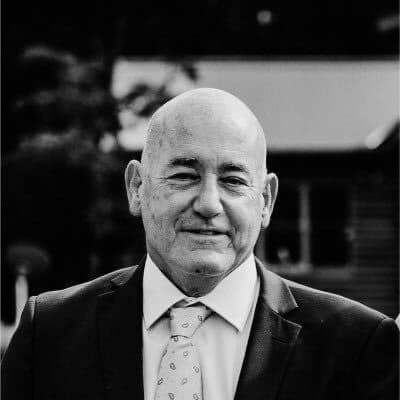
"We set a plan five years ago to be a $50 million company by 2025 — and we were $54 million in 2023. It's pretty cool."
Lee Watson, CEO, AEco
One Scoreboard to Unite Three Teams
The question Lee kept coming back to was, "How do you get an entire organization moving toward the same goals without losing what made each of them distinct?" What he needed was something that could turn three separate companies into one aligned team, holding each leadership group accountable to its priorities week after week, without that accountability depending on Lee himself. He decided to go looking for that answer.
That's when he found Align.
Beginning with Alloy Engineering, they started with a shared scoreboard and a strong meeting cadence. That meant daily huddles at 8:08 AM, monthly off-sites, and an annual two-day strategic planning session. Layer by layer, the structure took shape, with the scoreboard at the center of it all.
Every team member could see what was progressing, what was falling behind, and what needed a conversation.
"We really use the Align scoreboard to keep track of what we said we're going to do, whether we're doing it or not, how we're progressing on our priorities."
The real winning move was that the rhythm didn't stay at the executive level. It cascaded through the entire organization until every employee, and eventually across all three companies, was in a daily huddle. Nearly 200 people touch base each morning to ensure they know what matters that week and why.
"Everybody's in the system at least twice a day."
Cutting Initiatives Was the Key to Finishing Them
As the system took hold, Lee came face-to-face with a problem that he had to take ownership of.
"I've never met an improvement initiative that didn't make me want to stop what I'm doing and do right now. Early on, we had way, way too many initiatives — and we didn't get a lot of them done."
Left unchecked, that instinct had a cost. Too many initiatives meant too little focus, and too little focus meant too many things left unfinished. Align became the mechanism that kept that tendency in check. If a new initiative came up, something already on the list had to pause. Quarterly priority reviews became the moment of reckoning: Is this still relevant? Is it getting done?
If the answer to either question was no, it got cut.
Scaling the System Across Multiple Locations
Acquiring ThermCraft and Mach 3 brought new revenue and new headcount — but it also meant connecting two new leadership teams to a system that had taken years to build at Alloy Engineering.
The daily huddles transferred. The meeting cadence transferred. But the deeper work, getting each new leadership team to own annual initiatives, commit to quarterly priorities, and use Align to hold themselves accountable for completing them, took much longer.
In some cases, it's still in progress.
"We've been using the huddle and meeting cadence at all the companies. But Mach 3 and ThermCraft haven't really done the annual initiatives and quarterly priorities. So we used Align to drive the accountability to complete them."
So they went back to the beginning. They restructured their strategic planning engagement to walk each company through the full process, the same way Alloy Engineering built their habits — one quarter at a time.
The Results: Three Companies Become One Aligned Team
Five years in, the results are concrete.
AEco set a goal of reaching $50 million in revenue by 2025. They hit $54 million in 2023 — two years early, and multiple employee-owners have already retired with over a million dollars in retirement assets. Their BHAG isn't just a mission statement anymore. It's paying out.
The employees who showed up every day, trusted the system. They did the work and are retiring with proof of it.
Perhaps the clearest sign that the system has taken hold is what Lee was able to do next. He recently announced that Marianne Remner, described as "probably the toughest person in the whole company," will become President in January, with a structured two-year CEO transition through the end of 2027. It's a leadership handoff built on a system that doesn't depend on who's in the seat.
The organization is more complex now than it's ever been, but every morning at 8:08, nearly 200 employee-owners open the same scoreboard, across three companies and two states, working toward the same goals.
That's what alignment actually looks like in practice.
"I love the product. I love the process. We run all three of our businesses with this tool."