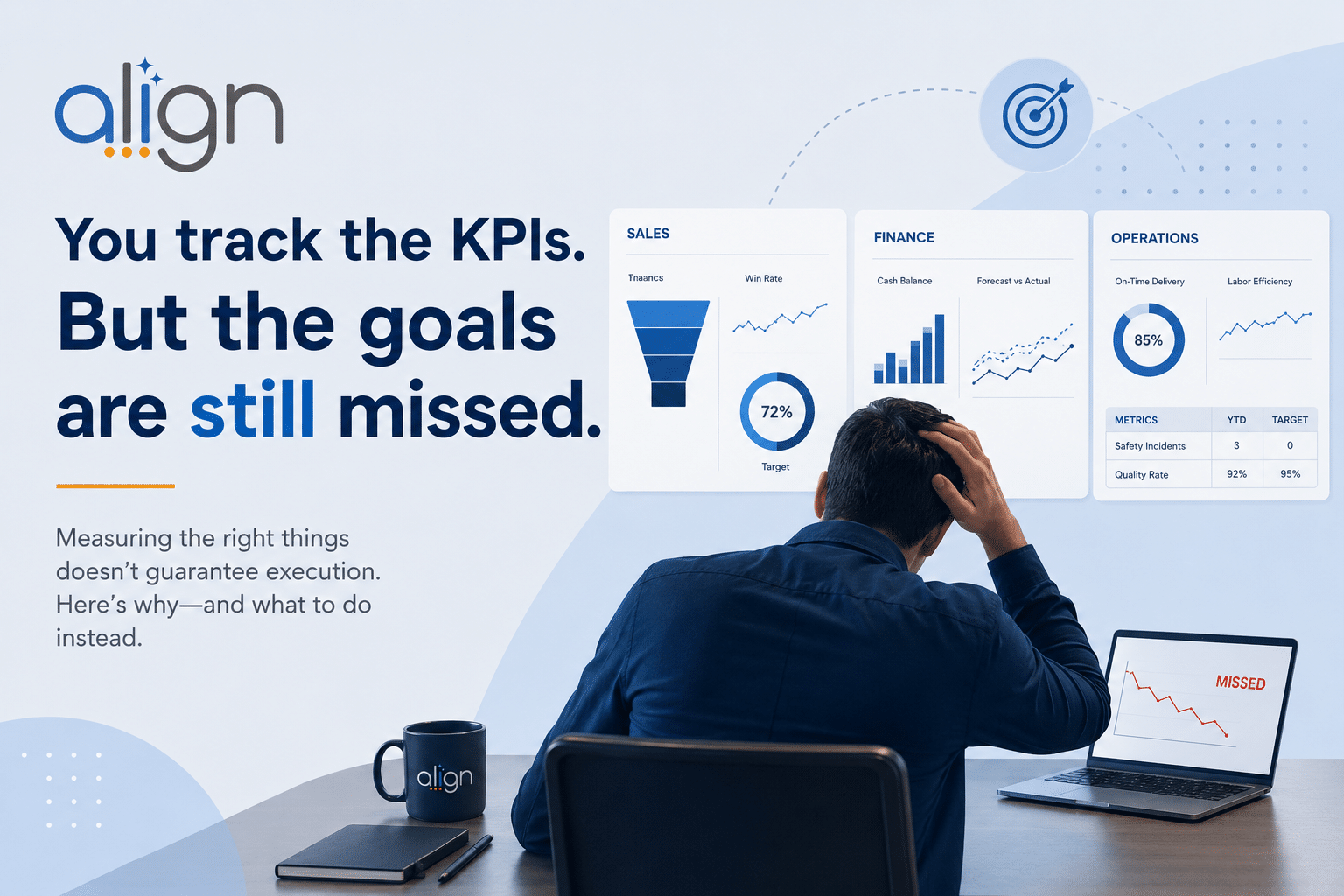
Why Your Team Isn’t Using AI to Hit Goals — and What to Do About It

The AI adoption conversation is dominated by two camps right now: the “AI will replace your team” fear camp and the “here are 10 AI tools you should try” productivity camp. Neither speaks to you, the growth-stage CEO trying to get a 30-person team to actually change how they work.
The conversation should be centered around why adoption hasn’t translated into results — and what to do differently this quarter.
Adoption vs. Integration: Why the Difference Costs You Goals
The benefits of AI use tend to concentrate at the level of individual tasks rather than broader workplace systems. Only about one in 10 employees in AI-adopting organizations strongly agree that AI has transformed how work gets done in their organization, according to Gallup.
Read that again. 1 in 10.
Your team can use AI every day and still miss every quarterly goal. That’s what adoption without integration looks like. Your marketing lead summarizes meeting notes faster. Your ops manager uses it to help them draft SOPs. Your finance analyst runs reports in half the time. All of these efficiencies free up time for higher-level work, yet none of it compounds toward shared goals that grow the company.
Integration is different. Integration means AI is doing work that feeds your priorities — helping your team set clearer targets, surface risks earlier, and close quarters stronger. Most leadership teams haven’t made that connection yet.
Why Your Team Isn’t Actually Using It
Before you fix the integration problem, you need to understand what’s preventing the team from adopting the tools.
Most leaders assume the barrier is skill. Get better at prompting, learn the tools, run more training. That’s part of it. But it’s not the core issue.
A 2025 Pew Research survey found that 52% of U.S. workers are worried about the impact of AI on their future job prospects, and about one-third believe AI will lead to fewer job opportunities for them. That kind of anxiety doesn’t show up in an onboarding survey. It shows up as non-adoption — team members who nod in the meeting and then go back to their existing workflow.
The result: a team member attends the AI training, nods through the demo, and then opens the same spreadsheet they’ve used for three years. According to a 2024 EY survey, 75% of employees worry AI could eliminate jobs — with 65% concerned about their own role specifically. That anxiety doesn’t announce itself. It just quietly wins every time someone has to choose between the familiar workflow and the new one.
So you’re dealing with two forces at once: fear and friction. Fear tells your team the tool threatens their value. Friction tells them it’s too hard to use in the context of the work they already have to do. Address only one, and you’ll get surface compliance. The tool is used occasionally for low-stakes tasks and never touches the goals that matter.
Leaders Go First
You don’t get team adoption without leader adoption. This is an execution principle.
Leaders who use AI tools themselves to draft priorities, review KPI trends, and prep for board conversations give their teams a concrete model to follow. They also give their teams permission.
When your team watches you use AI, you lower the fear. They see the tool helping rather than replacing. And you lower the friction, because now they have a concrete example of how to use it in the context of their actual job.
Telling your team to “use AI more” changes nothing. Showing them how you use it to make better decisions every week changes the culture.
Start With Low-Stakes Practice
The fastest path to real adoption is building low-stakes reps before the stakes matter. Here’s what that looks like in practice:
- Draft a quarterly priority before your next planning session. Use AI to generate a first cut of what success looks like, what tasks get you there, and what might slow you down. Then pressure-test it with your team.
- Ask AI to help you write a KPI. Most KPIs are too vague to drive accountability. Have your team draft a measurable version of a goal they’re responsible for, then refine it. The conversation that follows is usually better than the output.
- Summarize the key decisions from last week’s leadership meeting. Before the next one, use AI to surface what got resolved, what got punted, and what still needs an owner. No agenda required.
- Run a quick risk scan on a goal that’s behind. Describe where things stand and ask what’s most likely to keep the goal off track. You’ll catch things your team isn’t saying in meetings.
- Use AI to prep for a hard conversation. Whether it’s a performance conversation or a board update, thinking through the likely questions and gaps in advance reduces surprises.
Technical expertise isn’t the entry point. Repetition is. Each of these builds the kind of comfort that turns occasional use into a weekly habit.
AI adoption becomes even easier when you already have an execution structure. To start building that structure, enroll in The Execution Blueprint — a free email course that walks you through the habits and systems that make execution stick.
What Integration Actually Looks Like
When AI moves from enforced to integrated, it enhances your processes, but most importantly, it shows up in your results.
Your leadership team builds quarterly priorities faster and with more specificity. KPIs get written with measurable targets instead of directional intentions. The gap between what gets decided in planning and what actually gets executed narrows, because the tools that help your team work are connected to the goals they’re supposed to hit.
Leadership is where integration pays off the most. When you’re reviewing a quarterly goal, analyzing a KPI trend, or preparing for a board conversation, AI compresses the time between the question and the answer. That compression adds up across a quarter. And over multiple quarters, it compounds.
That time goes back to the goals that move the company forward. The teams pulling ahead right now have figured out that AI doesn’t replace the work — it clears the path to finish more of the work that matters.
Closing the Execution Gap With AI
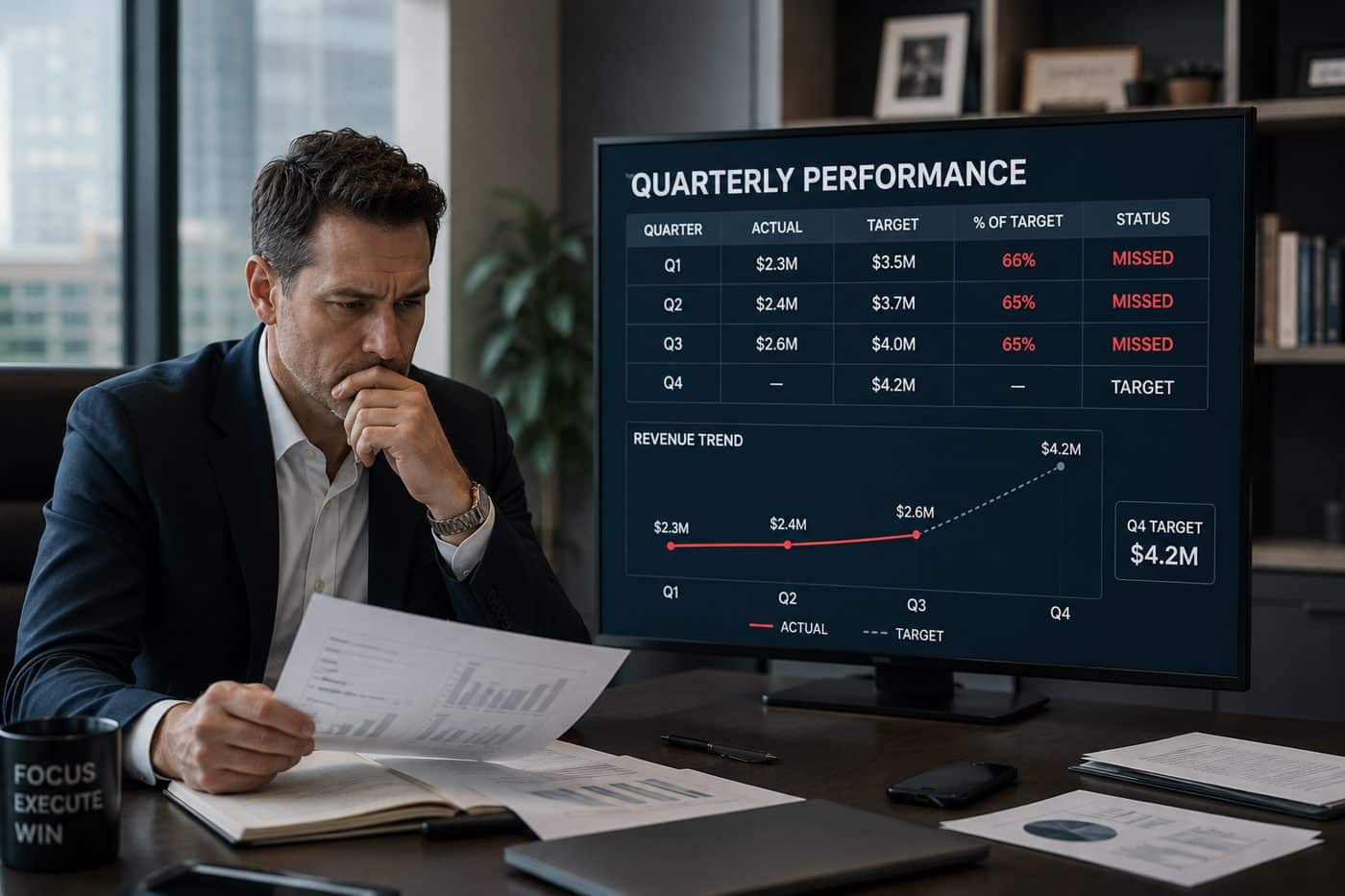
You can roll out AI access to every team member and still finish the year with the same missed goals, the same explainable shortfalls, and the same end-of-quarter conversations about why the plan didn’t hold.
Access doesn’t drive results. Habits do.
The companies seeing real returns from AI have one thing in common: they’ve connected the tool to the work that drives goals, not just the work that fills the day. Weekly priority updates, visible KPIs, consistent meeting rhythms — these are the containers that make AI integration stick. When your team has a structured system for execution, AI has somewhere useful to land. Without that system, it just makes individual tasks slightly faster while the goals stay stuck.
If you want to see what a structured execution system looks like — and how AI fits into it from day one — book a walk-through of the Align system today!
Smart Moves Today. Big Wins Tomorrow.
Align is strategic execution software for leadership teams who want plans to turn into results. More than 2,200 companies across 64 countries use Align to build consistent execution habits, run effective weekly meetings, and keep teams accountable quarter after quarter. Learn more at aligntoday.com.