Elevate Your People with a Coaching Culture

A Ways to Go
Today’s workforce demands a change in leadership style. Gallup reported that employee engagement stagnated, hovering around 35% for several years, but fell to 31% in 2024. That means roughly two-thirds of employees still show up and do the bare minimum or actively spread dissatisfaction.
Several years post-pandemic, the engagement challenge has only intensified. Economic uncertainty and rapid organizational change have made it harder than ever for employees to feel connected to company goals.
Clearly, there is still room for improvement.
Luckily, Gallup’s study also looked at the traits of companies with the highest engagement and those that improved over time. They dubbed these companies “high-development cultures” because employees could understand how their work impacted the organization and develop their skills and passion into a career.
In short, Gallup found high-development cultures had four things in common:
1) The organization has a clearly defined purpose, and executives embody it.
2) Managers act as coaches, not bosses, and encourage team collaboration.
3) Company-wide communication.
4) Everyone, even managers, is held accountable with clear expectations, ongoing conversations, and full accountability.
Organizations with high engagement have cultures where employees work for more than just a paycheck. They understand that their work matters and not only advances the company’s goals, but also their own personal career goals. Most importantly, managers in high-development cultures do not occupy positions of unchecked power; they act as coaches, held accountable for team performance.
Heading in the Right Direction
Striving for 100% engagement may seem idealistic, but the cost of disengagement is not just a moral issue. Gallup estimates that low engagement costs the global economy $8.8 trillion in lost productivity. But here’s what’s changed: engagement isn’t about perks or culture initiatives anymore. It’s about visibility. Employees need to see how their work connects to company goals. Not hear about it in quarterly all-hands meetings, but see it in real time, every week.
With disruption transforming industries, an engaged, proactive workforce is critical for staying competitive. Every employee needs to feel empowered and motivated to actively solve problems in their organizations. Managers must now act as coaches who align team member skillsets and purposes to maximize productivity and creativity.
As Herminia Ibarra and Anne Scoular write in “The Leader as Coach” in Harvard Business Review, “companies are moving away from traditional command-and-control practices and toward something very different: a model in which managers give support and guidance rather than instructions, and employees learn how to adapt to constantly changing environments in ways that unleash fresh energy, innovation, and commitment.”
But as the engagement numbers reflect, most managers aren’t doing a great job at coaching. A study of 2,761 executives published in HBR by Joe Folkman & Jack Zenger found twenty-four percent of the executives significantly overestimated their coaching abilities, leading the authors to conclude “If you think you’re a good coach but you actually aren’t, this data suggests you may be a good deal worse than you imagined.”
Elevating the managers in your organization to be successful coaches requires the right tools and habits. As embodied by executives down, it means a trust in the coaching process.
Trust the Coaching Process
At Align, we work a lot with business coaches who help CEOs and executive teams flesh out their organization’s values, purpose, and Big Hairy Audacious Goal. By focusing on their “why”, the coaches help build a business that motivates and inspires it’s leaders.
Yet, as with any change management, leaders often have a difficult time getting the rest of the organization to align their efforts behind this new vision. If workers are not engaged to begin with, the additional effort of change management is unlikely to gain traction.
Leaders come back from strategic planning sessions energized about the Big Hairy Audacious Goal. Then they try to cascade it to the team and it dies in spreadsheets and slide decks no one looks at. Great managers extend the coaching process down through the organization by making execution visible. Every manager within the organization should be equipped to communicate the company’s mission and values and keep them alive in their teams. They should feel comfortable having conversations with team members about individual career goals and how their skills can best contribute to the team.
As Simon Sinek says in Start with Why, “Unless you give motivated people something to believe in, something bigger than their job to work toward, they will motivate themselves to find a new job and you’ll be stuck with whoever’s left.”
What Makes Up The Process
Any successful coaching practice centers on aligning three key components.
1) The Why
Everybody has a purpose. Coaches help individuals find and pursue that purpose. As coaches, managers align their team behind a single collective purpose that helps individuals find personal fulfilment. Your purpose and your values should drive every other decision you make.
2) Goals
Coaches help people define and achieve objectives. Coaches hold people accountable to reaching their goals. Coaches help push people to achieve more by fostering a growth mindset. As coaches, managers collaborate with reports to define individual and collective goals. Individual goals are aligned with team or organizational goals.
3) Communication
Coaches frequently communicate to help keep goals on track and maintain focus on the “why”. If goals go off track, they help make adjustments to keep progress on track. Coaches build trust to encourage vulnerability about what holds people back from their goals and work on how to overcome obstacles. As coaches and managers, they discuss goal progress, vision, and professional development goals with their teams. They foster open, honest relationships centered around maximizing personal and professional growth.
4) Visibility
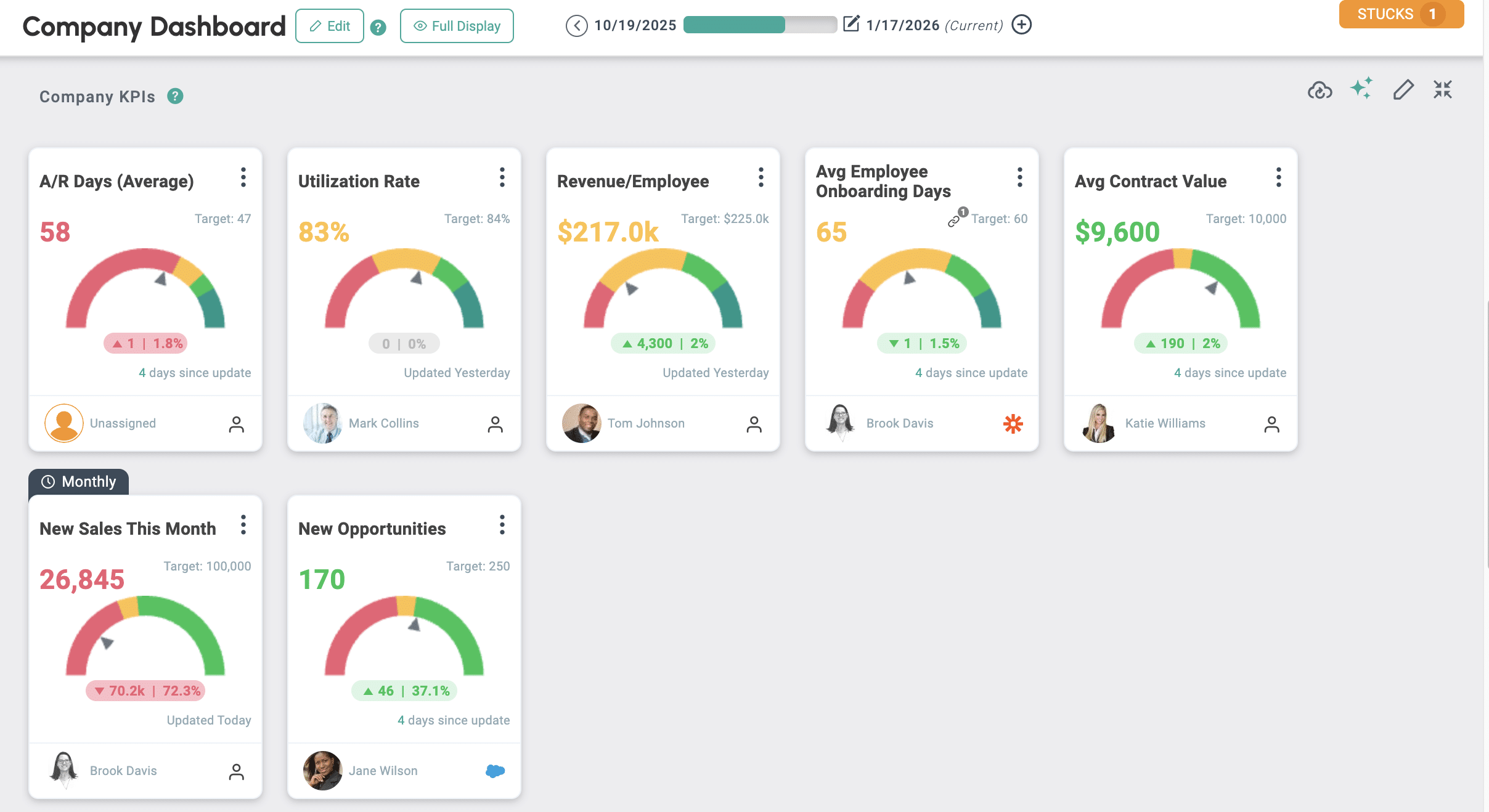
Coaches make progress visible. In sports, there’s a scoreboard. In business, most teams work without one. Managers who want to be stronger team coaches should ensure that goals, ownership, and progress are visible to the entire team (not buried in spreadsheets that only leadership sees). When the scoreboard is visible, teams self-correct without waiting to be told.
Coaching Unlocks Performance
For any organization hoping to get the most out of its workforce, fostering a culture of coaching goes a long way to improving performance and maximizing engagement.
Some managers may not think they need coaching about their “coaching”, and some people may resist coaching in general. But establishing a process that enables managers to be great coaches helps individuals quickly understand that their work matters. When trust in the coaching process builds, managers can unlock the full potential of their teams.
As the great Tom Landry said, “A coach is someone who tells you what you don’t want to hear, who has you see what you don’t want to see, so you can be who you have always known you could be.”
We all have things we can improve on, personally and professionally. Coaches help us define a purpose bigger than ourselves and overcome barriers to pursue that purpose. As managers become better coaches with the right tools, personal and organizational growth follow.
If you’re interested in how Align can help develop a culture of coaching in your organization, talk to an advisor today!