You Don’t Need More Software. You Need a Different System.

There’s no shortage of platforms promising to help your business grow and scale — yet execution has never felt more elusive.
That’s not a coincidence.
The tools aren’t failing because they’re poorly built. They’re failing because they’re solving the wrong problem. Tracking behavior and changing behavior are fundamentally different challenges. Every dashboard, OKR platform, and goal-tracking tool on the market is built for the former. They show you what’s happening. They document what happened. They generate reports about what might happen next. What they don’t do is change what your organization actually does on Monday morning.
Data Doesn’t Drive Execution. Behavior Does.
When a leadership team buys a new growth tool, the pattern is familiar. There’s a setup period, a training session, an onboarding call. The dashboard gets configured. The KPIs get entered. The goals get assigned. The platform launches.
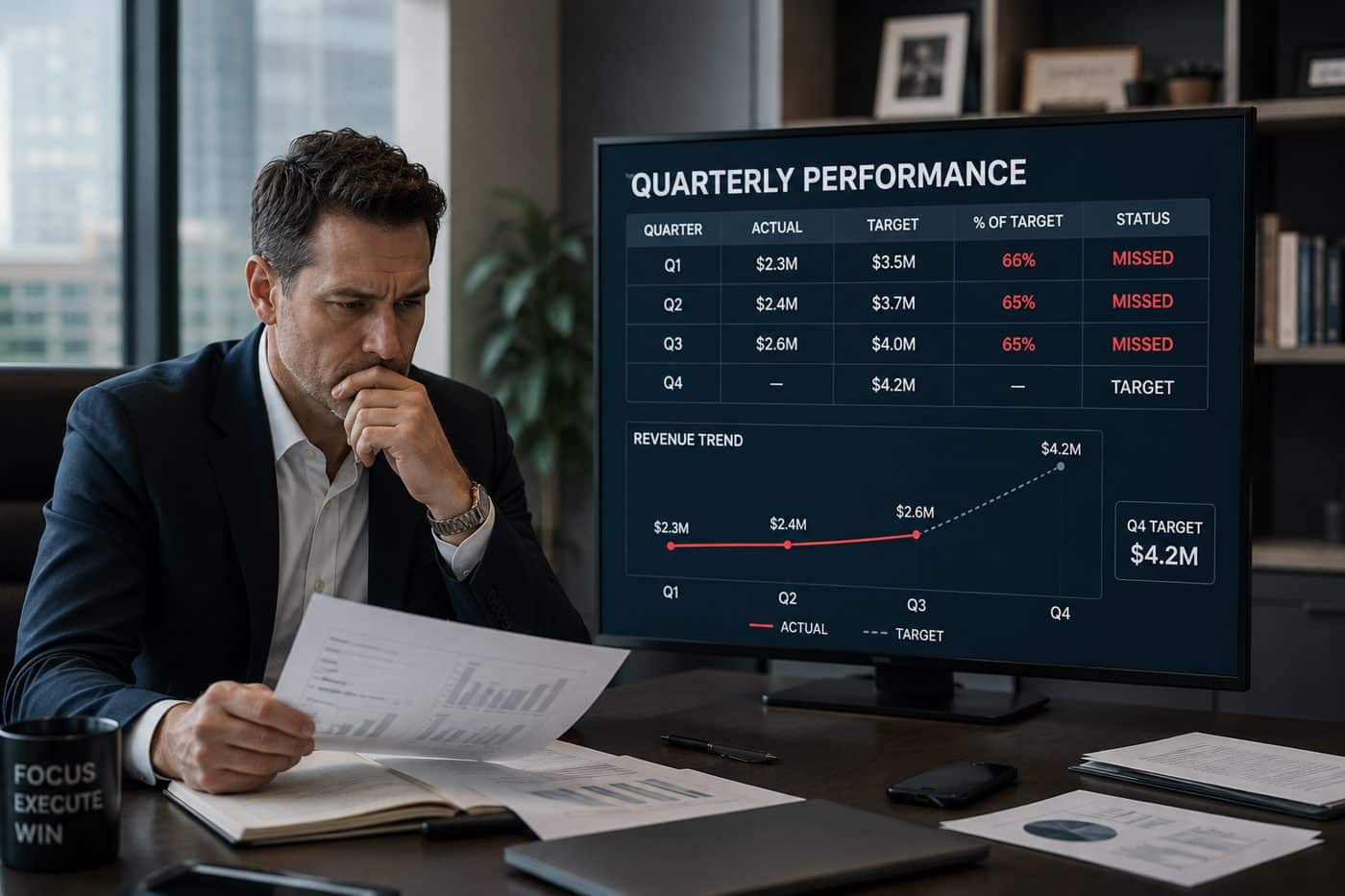
Three months later, the numbers are being reviewed on the same schedule as before. The same priorities are falling through the same cracks. The tool is being used to track the tasks and the numbers, but the organization isn’t executing differently.
The problem isn’t adoption. It’s architecture. The tool was designed to give leaders better visibility into what’s happening. It was never designed to change what happens.
For many companies, the gap between strategy and results isn’t just a visibility problem — it’s a behavior problem. The leadership team already knows the priorities aren’t being executed. They can see it. What they can’t do is change it — because knowing and changing are two different things.
Kaplan and Norton found in their own research, published in The Execution Premium (Harvard Business Press, 2008), that fewer than 10% of employees understand their company’s strategy. The gap isn’t in the quality of the plan. It’s in the infrastructure that connects the strategy to daily behavior — at every level of the organization.
That’s what a system is built to close. A tool can’t do it.
What a System Actually Delivers
A tool sits alongside the work. A system restructures how the work gets done.
It starts with rhythm.
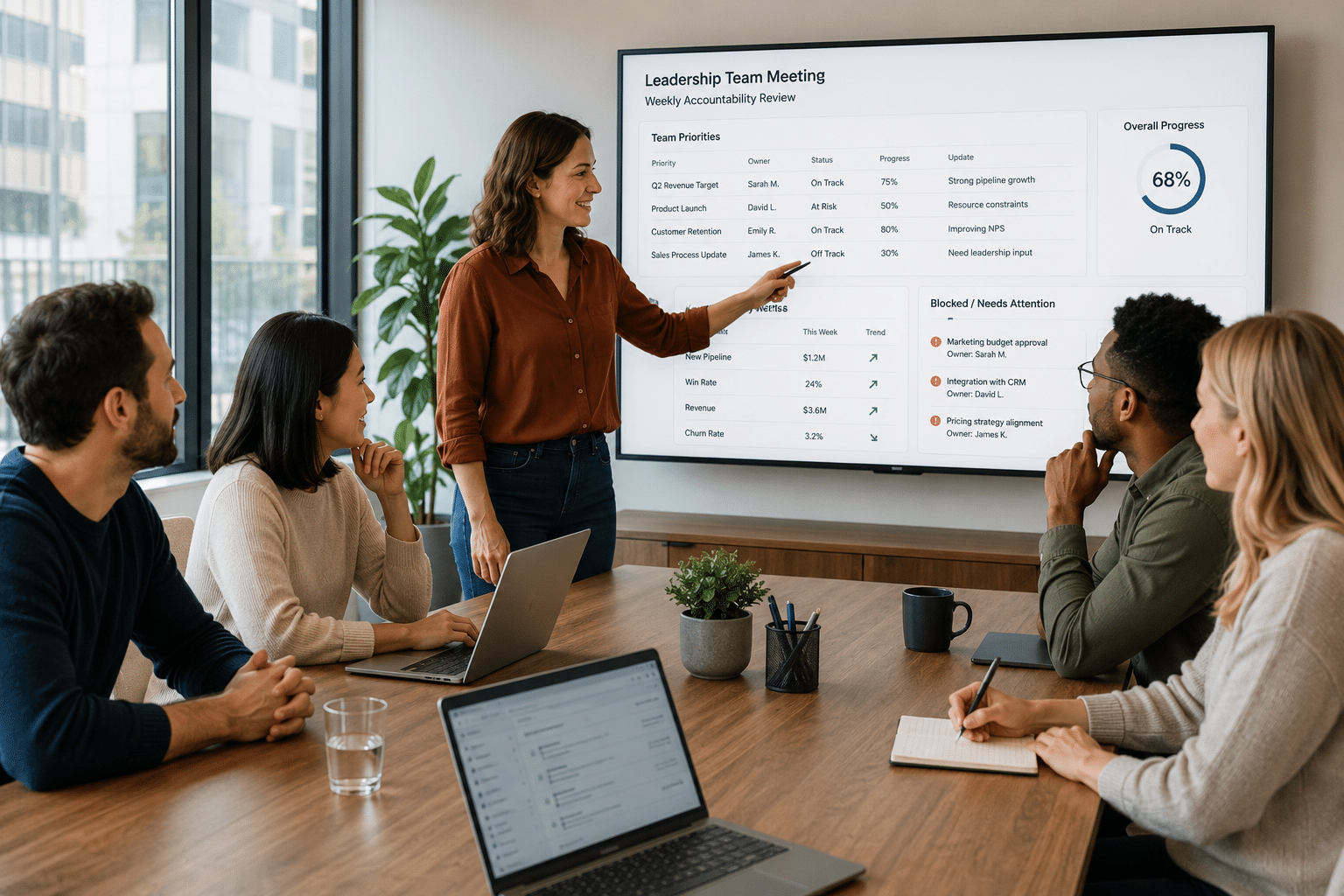
The rhythm of huddles isn’t just about meeting. It’s where accountability and execution come together. Before the meeting, the system forces preparation. Every team member reviews their numbers and priorities, and commits to what they will do that week to move them forward. Not just another update. Actions. Accountability comes from the group, not the manager.
During the meeting, the commitments are tested. If something isn’t done, the conversation is focused on impact and course correction.
After the meeting, there’s nowhere to hide. A full recap goes out to everyone. The public nature of shared visibility changes how people behave — before anyone asks them to.
And in between, the system emphasizes focus with task reminders and target notices, so progress doesn’t wait for the next meeting.
That’s not a shift in reporting. That’s behavioral change.
In their 2014 survey, Strategy& found that 42% of executives say their companies aren’t aligned behind their strategy. The visibility exists at the top. The alignment doesn’t reach the people executing the work.
A tracking tool doesn’t close that gap.
What does? A system that makes this quarter’s priorities impossible to ignore, and reinforces the habits to finish them.
The Difference Shows Up in the Fourth Quarter
A tool will show you the same results in quarter four that it reflected in quarter one. It’s designed to track what you put in.
A system compounds your results quarter over quarter. The habits built in quarter one are stronger in quarter two. Stronger still in quarter three. By quarter four, the execution rhythm isn’t something leadership has to enforce — it’s how the organization operates. Accountability is cultural. The visibility is expected. The ownership is automatic.
That’s not a feature update. It is an organizational shift, and it only happens when the platform underneath it is built to change behavior, not just report it.
Growth isn’t something software can deliver. Growth is something organizations produce — consistently, quarter over quarter — because the habits are strong. Systems like Align hold those habits in place.
The question worth asking is not which tool shows you the best dashboard, it’s which system changes how your team operates the week after you implement it…And every quarter after.
See how Align builds the system that reinforces execution → Show Me The System