The Difference Between A Cost Target And A Cost Strategy
Sixty percent of U.S. businesses say tariffs have increased or will increase their operating costs this year. Health insurance renewals are coming in at 11% over last year. For many companies, employment is flat, with headcount reductions more likely than additions. Cost pressure in 2026 arrives from multiple directions at once, all converging on targets set in December.
Those targets now have to survive a year that looks nothing like the one they were built for. Understanding the difference between a cost target and a cost strategy is what determines whether they do.
The Budget Approves the Number. Execution Determines Whether It Moves.
The budget was built on what was known in December. Despite what might have been a conservative plan, The Conference Board found that 71% of CEOs reported higher costs from tariff increases alone in Q1. That’s before health insurance renewals and supplier adjustments, and before April’s tariff escalation conversations.
A department head approves a vendor contract extension — reasonable, operationally necessary — without knowing that vendor category was flagged for reduction this year. An operations manager adds a part-time hire to cover a seasonal surge, unaware that headcount costs are already running over target. Neither decision is wrong in isolation. Together, they erode the cost target before Q2 closes, and no one connects the dots until the quarterly review.
Cost targets don’t fail in a single moment. They erode one reasonable decision at a time.
A cost target captures intention at a point in time. A cost strategy moves that intention forward throughout the year — adjusting quarterly targets as the climate changes.
Ownership Is Where Cost Strategies Win
“The leadership team owns the cost reduction initiative” is among the most expensive sentences in business. When accountability sits at the team level, it disappears into the general workload — surfacing at the quarterly meeting as an explanation, not a number.
The reason is more specific than it looks. Donald Sull, Charles Sull, and James Yoder surveyed more than 4,000 people across 124 organizations and found that 97% of senior leaders reported a clear understanding of their company’s priorities — while only 25% could actually name three of them. The gap between perceived clarity and actual clarity is where cost initiatives go quiet. Leaders believe the organization is aligned. The initiative competes for attention with everything else, and everything else tends to be louder.
When decisions get made without a shared picture of what the strategy requires, savings appear in one budget line while margin erodes in another. The work produces activity. The results don’t arrive. By the time the quarterly review surfaces the gap, the quarter is already gone.
What a Cost Strategy Requires
A cost strategy has four components that a cost target does not.
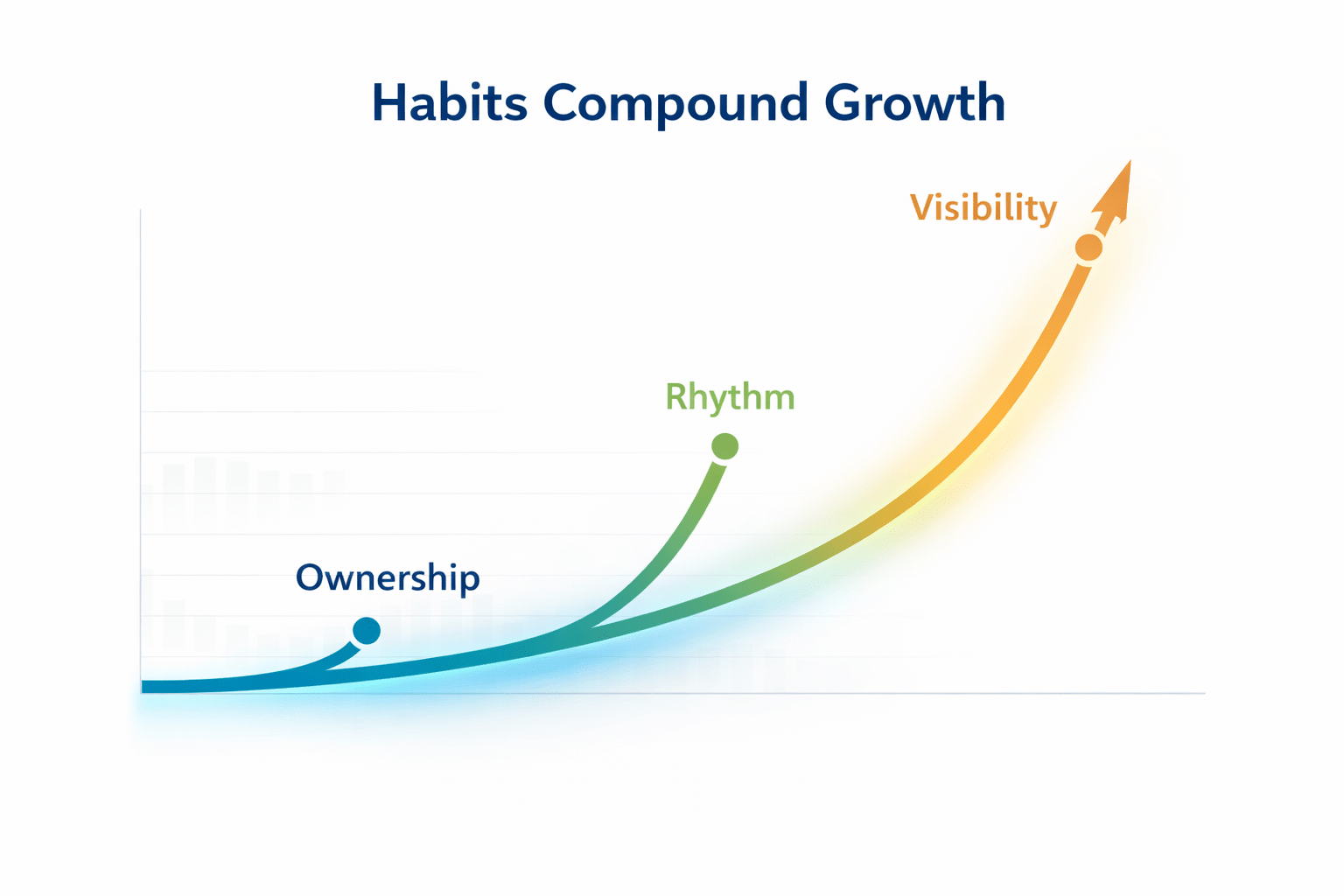
A single named owner. Not a team or a department — one person accountable for weekly progress, who can report on current status without pulling a report.
A weekly metric. A number that shows, week over week, whether the initiative moved. A weekly signal tells the leadership team whether the work is tracking, stalling, or at risk before the quarter closes — not after.
Visible status. The full leadership team sees where the initiative stands — green, yellow, or red — without scheduling a meeting to find out. When the scoreboard is visible, the team doesn’t wait to be told what’s happening.
A clear risk picture. At any point in the quarter, the owner can answer one question without pulling a report: what’s at risk by end of Q2? Not a summary — a specific read on what’s slipping and what recovery looks like.
Run this test with your leadership team this week. Ask three questions: Who owns the cost reduction initiative? What moved last week? What’s at risk by end of Q2? Where the cost target has been built into a cost strategy, those questions take under two minutes. Where the target lives in the budget but not in the execution system, they produce a 20-minute meeting — and that meeting has a cost that shows up in Q2 results.
The Math on Getting This Right
A 10% reduction on a $5 million operating budget is $500,000. That’s not a small figure. The question is will your execution system effectively capture it.
Ricoh USA built a system that did. Rather than managing cost initiatives through periodic budget reviews, their leadership team tracked savings targets with the same visibility and ownership applied to growth priorities — a single owner for each initiative, weekly status the full executive team could see, and a clear picture of what was at risk each quarter. Align helped them drive strategic priorities and savings simultaneously. The cost strategy didn’t replace their growth agenda. It funded it.
That equation holds at any scale. PwC’s 2026 Global CEO Survey found that only 30% of CEOs are confident about their company’s revenue growth prospects — the lowest reading in five years. In that environment, executing a cost strategy with the same discipline applied to a sales target is how leadership teams protect the margin that funds everything that comes next.
The companies that come out of 2026 stronger won’t be the ones that cut the most. They’ll be the ones who execute with the most consistency.
Smart moves today. Big wins tomorrow.
See how Align builds the system that reinforces execution → Show Me The System